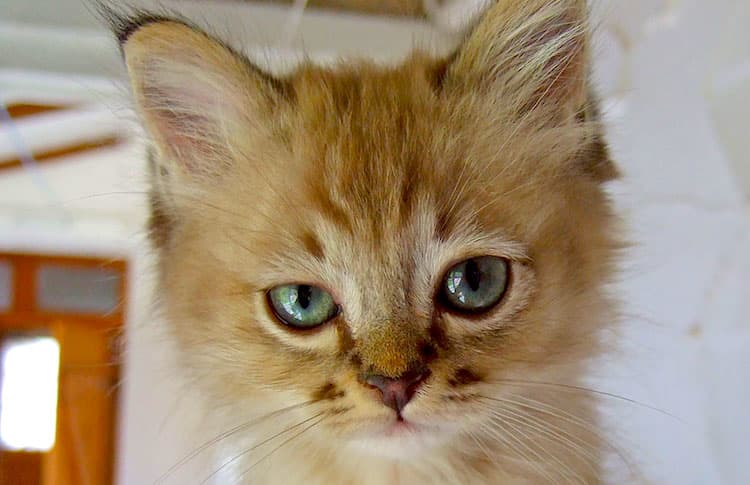
Do Cats Grieve When Another Cat Dies?
After the loss of a pet, many wonder, “Do cats grieve when another cat dies?” The loss of a pet is very hard for us, and it seems it can be for our cats too.

Petful is reader supported. As an affiliate of platforms like Amazon and Chewy, we may earn a commission when you buy through links on this page. There is no extra cost to you.
Do cats grieve when another cat dies? Yes. Surviving cats often show clear emotional and behavioral changes after losing a bonded companion, including appetite loss, increased vocalization, hiding, restlessness, changes in grooming, and searching the home for the missing cat. Mild grief usually eases within a few weeks. Stronger reactions can last several months and may need extra support.
Sometimes we get so caught up in our own grief over the loss of a pet that it can be easy to forget how much the other pets in the house can be hurting, too.
Often, pet parents wonder, “Do cats grieve?” and it seems as though they can, and often do, experience clear forms of grief.
- 1Cats can grieve the loss of another cat: Many cats show clear emotional and behavioral signs of mourning when a bonded companion dies.
- 2Grief symptoms vary widely: Changes in appetite, sleep, social behavior, grooming habits, or increased clinginess or withdrawal are all common responses.
- 3Support helps ease their grief: Keeping routines steady, offering extra affection, and providing enrichment can help a mourning cat feel more secure.
- 4Some cats may decline without their companion: In deeply bonded pairs, grief can lead to serious emotional or physical decline, so monitoring their health closely is important.

Sign up for expert-backed reviews and safety alerts all in one place.
Do Cats Grieve When Another Cat Dies?
Cats can grieve the loss of another cat, especially when they have formed a strong bond. Their reactions may be subtle or very noticeable, depending on the relationship and the individual cat.
Many cats also pick up on signs that a companion is sick or close to death long before it happens. For more on the behaviors that show up before a cat passes, see our guide on whether cats know when another cat is dying. This article focuses on what happens after the loss.
Circe, a blue Abyssinian, had a close and affectionate connection with Phoenix, a ruddy Abyssinian male. They spent their days playing together, snuggling under quilts, and keeping each other company. They also regularly groomed each other, a behavior that often signals trust and affection. Phoenix even treated Circe as his mate despite being neutered at an early age. Phoenix later developed kidney disease.
- His condition was managed for a year and a half through dietary changes.
- Each time he returned from the veterinarian, Circe would climb into the empty carrier and rest inside it.
- This became her little ritual, something she seemed to enjoy after any cat came home from a checkup.
One December afternoon, Phoenix did not come home. The carrier was empty, and when Circe approached it, she stopped, backed away, and looked confused and sad. From that moment on, she never climbed into the carrier again.
This example suggests that cats can feel the absence of a companion very deeply, and their behaviors may clearly reflect the grief they experience.

Color-changing crystal litter that flags pH shifts in your cat's urine, an early warning sign of UTIs, kidney issues, and more.
Petful may earn a commission when you click through to Chewy, at no extra cost to you.
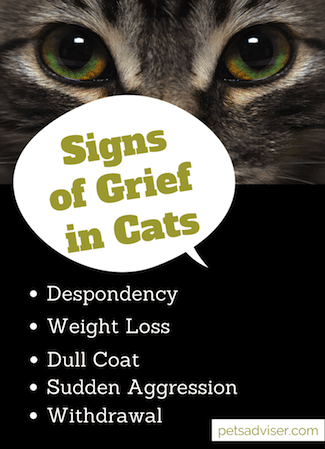
Signs of Grief in Cats
Cats do grieve, and Circe was a lost soul without her Phoenix. Sometimes we get so caught up in our own grief that it is easy to forget how deeply our companion animals can be hurting too.
Watch for these common signs of grief in a surviving cat. Each cat mourns differently, so monitor for any combination of these changes:
- Loss of appetite or weight loss (skipping meals for more than 24 hours warrants a vet call)
- Changes in sleeping habits (sleeping much more or much less than usual, restless sleep)
- Lethargy or withdrawal (hiding under beds or in closets, avoiding family interaction)
- Increased vocalization (crying out, meowing at night, calling that sounds like searching)
- Searching behavior (returning repeatedly to spots the missing cat used to occupy, sitting in doorways, sniffing bedding)
- Changes in grooming (over-grooming to the point of bald patches, or neglecting grooming entirely)
- Clinginess or sudden distance (some cats become much more affectionate, others pull away from everyone)
- Changes in litter box habits (going outside the box or skipping it altogether)
Some of these signs overlap with medical issues, so any change lasting more than a week is worth a vet check to rule out anything physical.
How Long Do Cats Grieve the Loss of Another Cat?
Most cats move through the most visible stage of grief within two to six weeks, though some cats grieve quietly for several months. The length of the grieving process depends on how bonded the two cats were, the age of the surviving cat, the personality of the cat, and how stable the household routine stays after the loss.
If a surviving cat is still showing strong grief symptoms (refusing food, hiding constantly, or losing weight) past the six-week mark, it is time for a vet visit. Prolonged grief can shade into depression, and depression in cats can mask or trigger physical illness. Cats are very good at hiding pain, so persistent behavioral changes deserve a professional look.
Cats grieving a sibling they grew up with often take longer to recover than cats who lost a companion they met as adults. The strongest cat-to-cat bonds usually form between littermates and between pairs raised together from kittenhood.
How Do Cats Grieve the Loss of Another Cat?
Cats may process the loss of a companion in ways that mirror human grief. Their behaviors can shift noticeably as they respond to the absence of a friend. Cats are more social than their reputation suggests, and bonded pairs often form attachments as strong as the bonds cats form with a single person.
Author Rita Reynolds explores this topic in her book Blessing the Bridge: What Animals Teach Us About Death, Dying, and Beyond. She shares the story of Thomas, a cat who lost his best friend Benjamin after a tragic accident. When Benjamin’s body was placed on a neighbor’s lawn, Thomas lay down beside him and rested his paw gently across Benjamin’s body. He remained so still and silent that the neighbor briefly believed both cats had passed.
Reynolds explains that this moment made her more aware of the signs of mourning in cats. These behaviors often include despondency, weight loss, a dull coat, aggression, or social withdrawal. She emphasizes the importance of helping grieving cats move through the emotional process.
- Kaetheryn Walker, a veterinary homeopathy specialist, describes a similar experience with her cat Sam.
- Sam declined rapidly after the death of his feline companion Smudge.
- Despite medical care and attention, Sam eventually stopped fighting for his own health.
- Walker later realized she had been so focused on preventing another loss that she missed the depth of Sam’s emotional suffering.
These accounts highlight how deeply bonded cats can be. They also help answer a question many pet parents ask: do cats truly mourn other cats?
Cats often do, and their grief deserves attention and gentle support.
Color-changing crystal litter that flags pH shifts in your cat's urine, an early warning sign of UTIs, kidney issues, and more.
Petful may earn a commission when you click through to Chewy, at no extra cost to you.
Do Cats Understand Death?
Cats almost certainly do not understand death the way humans understand it. There is no evidence that cats hold a concept of permanence around loss, and they cannot reason through the idea that a companion is gone forever. What cats do understand is absence. They notice that the other cat is no longer there, that the scent has faded, and that the daily patterns of the household have changed.
That noticed-absence is what drives much of feline grief. A cat may search the house for days or weeks, calling out in rooms where the other cat used to nap. Some cats sit at windows or doors as if waiting. Over time, the searching usually slows down as the surviving cat adjusts to a household that no longer includes their companion.
Allowing a cat to see and sniff the body of the deceased companion (covered later in this article) appears to shorten this searching phase for some cats, possibly because it provides a clearer sensory signal that the companion will not be returning.
Do Cats Grieve the Loss of Kittens?
Cats can grieve deeply when they lose their kittens. The emotional bond between a mother cat and her litter is strong, and the sudden absence of that bond can lead to visible signs of distress. Introducing a new kitten or young animal can sometimes help a grieving mother cat redirect her care and affection.
In Of Cats and Kin, Helga Harrison describes how her cat Wellington mourned the loss of an entire litter that was born still. Wellington sat miserably with enlarged pupils and what looked like tears in her eyes. Then another cat in the home gently brought one of her newborn kittens to Wellington. The grieving mother immediately began to wash the kitten, and caring for him eased her heartbreak.
- A similar story involves a father cat who carried a baby bunny to his grieving mate so she could nurse it.
- Another example is Dawnie, a red Abyssinian, who softened her grief over her lost kitten Aspen by caring for two kittens that arrived shortly afterward.
- These moments show how nurturing instincts can help cats cope with overwhelming loss.
In Circe’s case, the grief was profound. She tried to mingle with the younger cats, but the loss of Phoenix affected her deeply. Within weeks of his passing, she too developed kidney issues. Her health declined quickly, and she passed away five months later.
These stories remind us that the bonds between cats are powerful. When those bonds are broken, the emotional impact can be just as real for them as it is for us.
Can a Cat Die From the Grief of Losing Another Cat?
The phrase “dying of a broken heart” shows up often in stories about deeply bonded cats. There is some truth behind it. Cats do not die directly from sadness, but the chain of events that grief can set in motion is real and well documented in veterinary literature.
A grieving cat may stop eating. In cats, even a few days without food can trigger hepatic lipidosis (fatty liver disease), a serious and sometimes fatal condition. Stress and prolonged appetite loss can also worsen underlying issues that were previously well-managed, such as kidney disease, heart disease, or diabetes. In older cats with existing health conditions, the combination of grief plus reduced eating can be enough to tip the scales.
This is why monitoring a surviving cat closely after a loss is not optional. Track food intake, water intake, weight, and litter box use for at least the first month. If anything is clearly off for more than 48 hours, call the vet. Catching a stress-related decline early gives you the best chance of preventing a second loss.
Color-changing crystal litter that flags pH shifts in your cat's urine, an early warning sign of UTIs, kidney issues, and more.
Petful may earn a commission when you click through to Chewy, at no extra cost to you.
- 1Cats do not die from sadness directly, but grief can trigger appetite loss and stress that worsens existing health conditions.
- 2Hepatic lipidosis can develop after just a few days of not eating, so persistent food refusal is a real medical emergency in cats.
- 3Monitor weight, water intake, and litter box use closely for the first month after a loss.
- 4Call the vet if any change persists more than 48 hours.
How to Let a Surviving Cat Know Their Companion Has Died
Many vets and behaviorists now recommend allowing a surviving cat to see and sniff the body of their deceased companion, when circumstances allow. The sensory experience seems to help some cats shorten the searching phase of grief. They notice the lack of breath, the change in body temperature, and the change in scent, and many cats withdraw quietly after a few minutes of investigation.
If your cat passed at the vet and bringing the body home is not possible, you can still help the surviving cat by leaving the deceased cat’s bedding, blankets, and favorite toys in place for several weeks. Do not wash them right away. The lingering scent gives the surviving cat sensory information to work with as they process the loss.
Avoid rushing to rearrange or clean up the missing cat’s territory in the first week. Familiar smells and familiar physical layout both reduce stress for a grieving cat. Wait at least two to four weeks before changing the layout of the home, removing the other cat’s belongings, or considering adopting a new companion.
How to Support a Grieving Cat at Home
Grieving cats often rely on stability, gentle reassurance, and consistent care as they adjust to the loss of a companion. Small changes in their environment or routine can help them feel more secure during this difficult time. If you have other cats in the home, watch how they interact with the survivor (a previously easygoing dynamic can shift, and cats can show jealousy toward each other in unexpected ways after a loss).
Cats may show their grief through appetite changes, withdrawal, or altered grooming habits. Providing a calm, predictable space helps them regain confidence and feel safe again.
- Keep daily routines steady, including feeding times and quiet rest periods
- Offer comforting interaction when your cat seeks attention, but do not force it
- Provide enrichment such as window views, puzzle feeders, or gentle play sessions
- Observe changes in appetite, grooming, or litter box habits and write them down so you can spot patterns
- Consider pheromone diffusers or calming aids if your cat seems anxious
- Sit on the floor near your cat without forcing interaction. Read aloud or talk quietly so the cat hears your voice. Offer a small portion of a favorite high-value treat (warmed wet food, plain cooked chicken). Leave the deceased cat’s blanket where it was. These tiny moves provide sensory reassurance without overwhelming a withdrawn cat.
- Call your vet if your cat refuses food for more than 24 hours, hides constantly for more than five days, loses noticeable weight, stops drinking, or shows changes in litter box habits that last more than a week. Grief in cats can mask or accelerate underlying disease, and persistent symptoms are not something to wait out.
For more guidance on recognizing emotional and behavioral shifts in cats, the Cornell Feline Health Center offers an excellent overview of cat behavior changes.
Supporting your cat with patience and consistent care can help them gradually move through the grieving process.
Honoring the Bond Cats Share
Cats form meaningful social bonds, and losing a companion can affect them in profound ways. By observing their behavior, responding with empathy, and providing a stable environment, you can help guide them through their grief.
Every cat’s experience is unique. Some may recover quickly, while others need time, comfort, and attentive care before they begin to heal. Recognizing the depth of these bonds allows us to support our pets with the compassion they deserve.
Frequently Asked Questions
Most cats move through the most visible stage of grief in two to six weeks, but quiet mourning can continue for several months in deeply bonded pairs. If strong grief symptoms persist past the six-week mark, schedule a vet check to rule out medical issues.
Cats do not appear to understand death as a permanent concept the way humans do. They do understand absence: they notice that the companion is no longer there, the scent has faded, and the household routines have changed. That noticed-absence is what drives most feline grief behavior.
Many vets and behaviorists recommend it when circumstances allow. The sensory experience seems to help some cats shorten the searching phase of grief. They notice the lack of breath, body temperature change, and scent change, and most cats withdraw quietly after a few minutes.
Cats do not die directly from sadness, but grief can trigger appetite loss and stress that worsens existing health conditions. Hepatic lipidosis (fatty liver disease) can develop in cats after just a few days without eating, so any prolonged refusal to eat is a medical emergency.
Wait at least two to four weeks before considering a new companion. The surviving cat needs time to process the loss and adjust to a one-cat household first. Bringing in a new cat too soon can add stress on top of grief, and some grieving cats will reject a new arrival.
Keep daily routines steady, offer gentle interaction without forcing it, provide enrichment like window views and play sessions, leave the deceased cat’s bedding in place for a few weeks, and watch closely for appetite or weight changes. A pheromone diffuser can help anxious cats. Call your vet if any change lasts more than 48 hours.

Coreen Saito is a pet writer and longtime shelter volunteer with more than a decade in animal rescue. She covers cat behavior, breed care, and the small, ordinary science of sharing a life with companion animals, with a particular focus on honest takes about the products and decisions that actually matter. At home in Arizona, she's outranked by Mac (a dog with the loudest opinion in the house), Rebel (a cat who governs by quiet authority), and Meri (an orange tabby who runs the late shift and the laundry basket). She writes about all three, plus the rescues that keep coming through her life, at LifeWithMinty.com.
Sign up for expert-backed reviews and safety alerts all in one place.