Hyperpigmentation in Dogs: When a Dog's Tummy Has Turned Black
A dog's tummy that has turned black is usually hyperpigmentation, a sign of past itch, infection, friction, or hormonal disease rather than a disease itself. A vet explains the causes, what to check, and what fades.
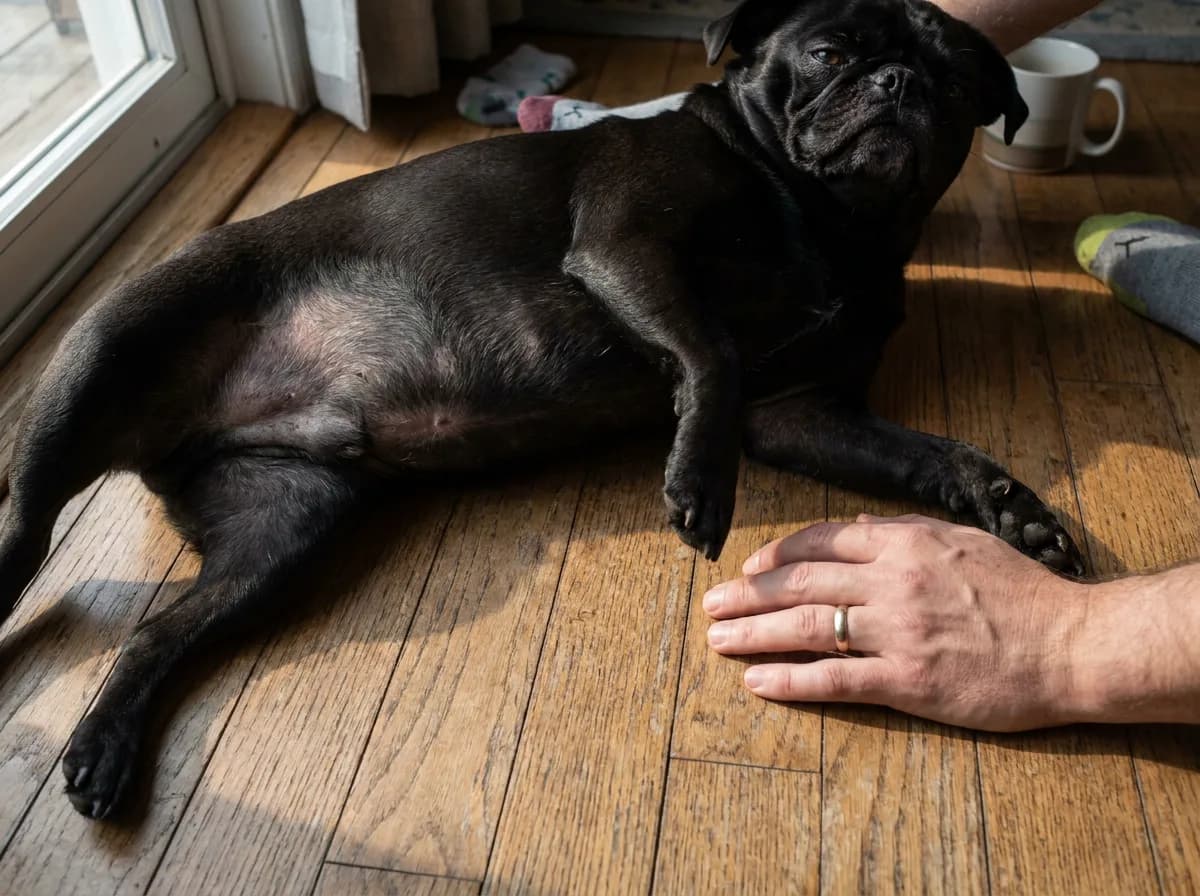
A black pug lies on its side on a sunlit wood floor with its belly exposed, showing smooth, slightly gray-toned skin, while a hand rests on the floor beside its paw.
Petful is reader supported. As an affiliate of platforms like Amazon and Chewy, we may earn a commission when you buy through links on this page. There is no extra cost to you.
Hyperpigmentation in dogs is skin that has become darker than it used to be. It shows up most often on:
- The belly
- The groin
- The armpits
In nearly every case it is a sign of something else, usually months of low-grade itching, a skin infection, friction, or a hormonal problem, rather than a disease on its own. Most dogs with a dark tummy are not in danger, but the darkening is worth explaining to your vet, because the cause is what gets treated.
Owners often think the change happened overnight. It almost never does.

Sign up for expert-backed reviews and safety alerts all in one place.
What Is Hyperpigmentation in Dogs (and What Color Is Normal Dog Skin)?
Hyperpigmentation in dogs is darkening of the skin caused by extra melanin, the pigment that colors a dog's nose and paw pads. The Merck Veterinary Manual describes it as light-brown to black, velvety, thickened, often hairless skin, and treats it as a sign of an underlying problem rather than a disease by itself.
- 1Dark skin on a dog is a sign of an underlying problem, not a disease on its own
- 2Common causes: chronic itch and allergy, yeast or bacterial infection, friction, and hormonal disease
- 3The itch or infection that caused it often happened months before you noticed the color
- 4Secondary darkening fades over weeks to months once the cause is controlled; primary Dachshund hyperpigmentation is managed, not cured
- 5See your vet promptly for a raised or growing spot, bleeding, sudden purple skin, or drinking and urinating more
So what color is dog skin supposed to be? Normal dog skin color runs from pale pink to gray to fully black, and many dogs are born spotted. Skin color and coat color do not have to match: a white dog can have black skin under the fur, and a black dog can have a pink belly. A dog with black skin from puppyhood is not hyperpigmented.
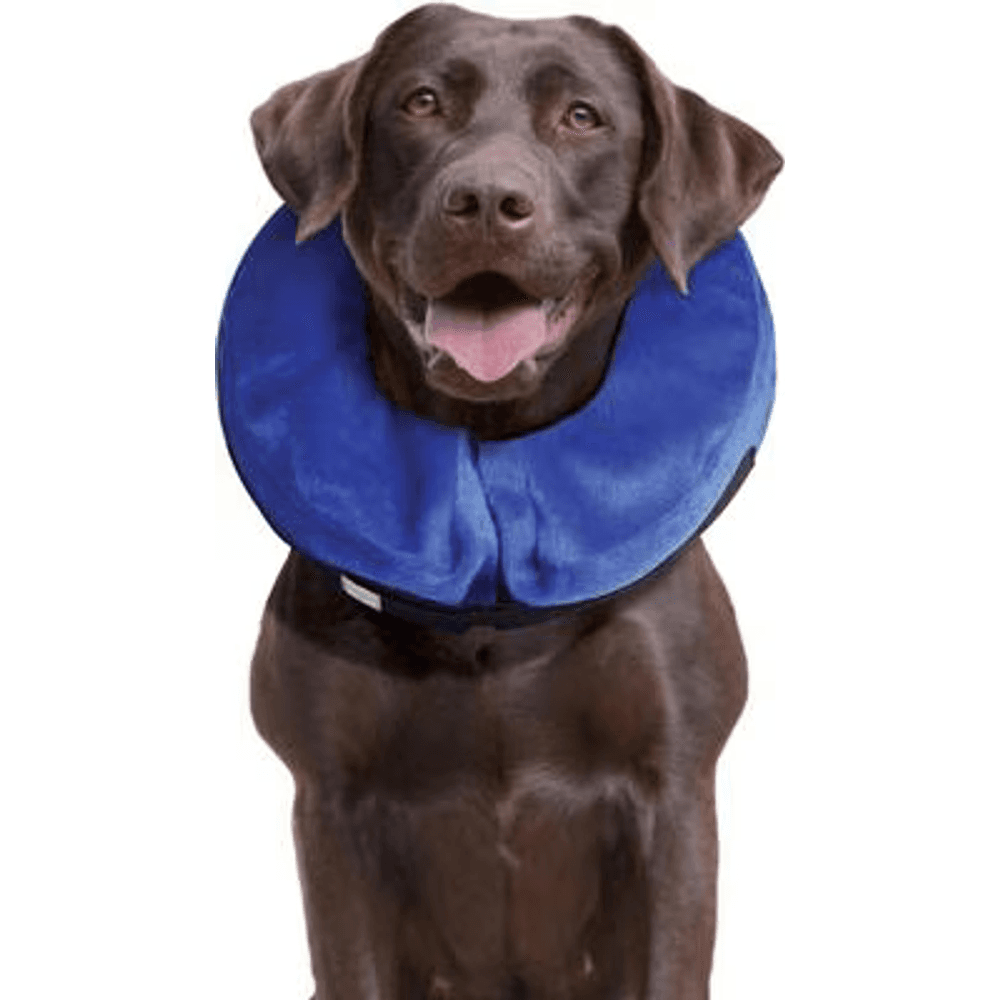
A soft, inflatable donut-style recovery collar that keeps many pets from licking or biting at a healing surgical incision or hot spot while still letting them eat, drink, and sleep in comfort.
Petful may earn a commission when you click through to Chewy, at no extra cost to you.
Hyperpigmentation is a change from your dog's own baseline: the belly that was pink at adoption and is now mottled gray-brown. Dogs' skin can change color, but slowly, which is why the shift is easy to miss. Skin discoloration in dogs usually follows a few patterns:
- Groin: groin-area hyperpigmentation on a dog's stomach is the classic early sign, because the inner thighs are where allergic dogs lick first.
- Rear end: a dog's bum or rear-end skin changes color for the same reasons, friction and licking, so the darkening there is usually even and slow.

 Sponsored
Want a vet's take on your dog's skin or coat?
Talk to a licensed vet at Dutch over video, often the same day. They can recommend treatment and prescribe it when it's appropriate.
Use code Pets30
Plans start at $11/month · covers up to 5 pets
- Licensed vets in most states
- Rx for 150+ conditions
- 4.7 on Trustpilot
What Hyperpigmentation Looks Like on a Dog (Photo Guide)
When a dog's belly skin darkens, the change usually shows up in two stages, early and established. For side-by-side photos of the look-alikes, WebVet's pictures of black spots on dog skin shows what each one means.
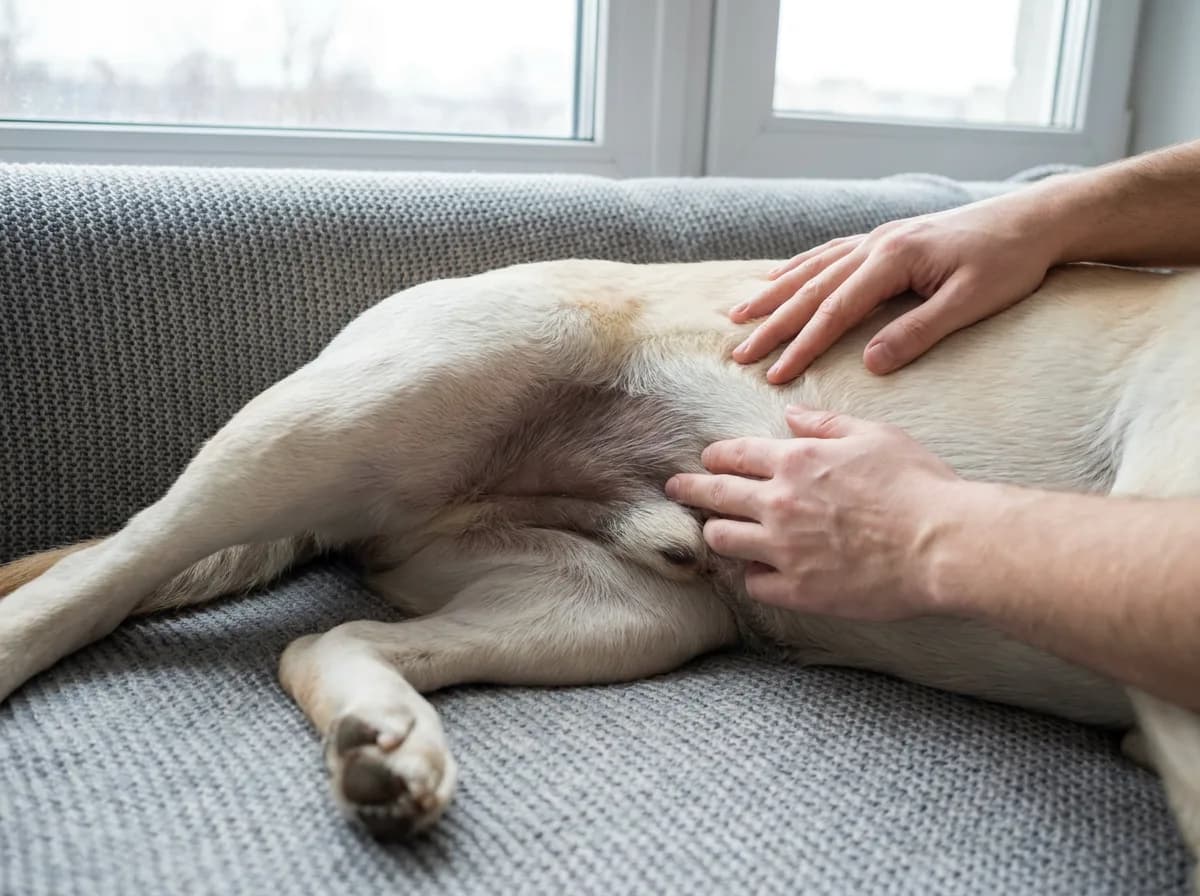
Early darkening
Early hyperpigmentation is flat even darkening in the groin fold or along the lower belly. The skin is still soft, the fur is still there, and the color is light brown to gray. At this stage the cause is usually still active and easiest to sort out.
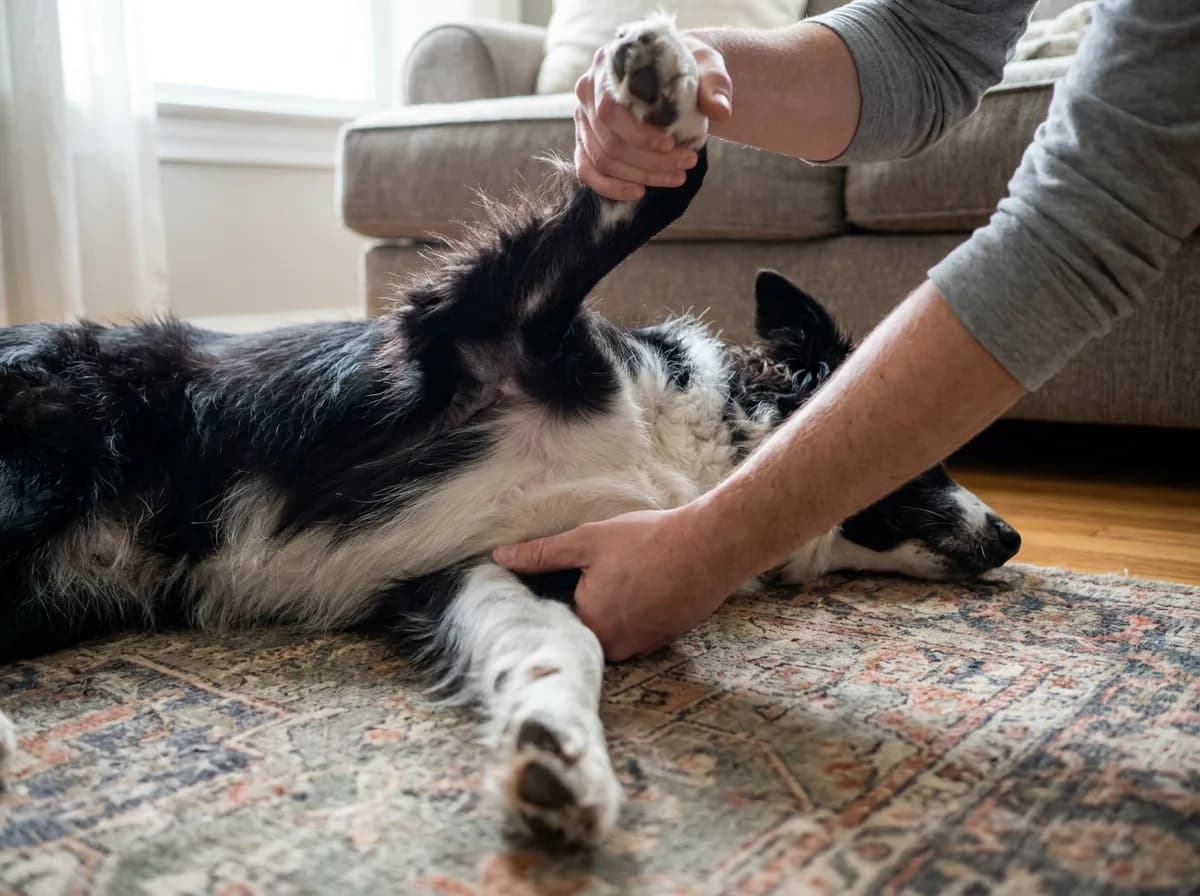
Established darkening
Established hyperpigmentation is thickened velvety skin in an armpit fold, groin, or inner thigh that has turned black and lost its hair. Vets call the thickening lichenification, and it means the skin has been inflamed or rubbed for a long time. Pictures of hyperpigmentation in dogs online tend to show this late stage. In both stages the darkening is diffuse and blends into normal skin; a single sharp-edged raised spot is something else and belongs in the look-alike section below.
Primary vs Secondary Hyperpigmentation in Dogs (and the Breeds Prone to Each)
The primary versus secondary split decides both the outlook and the treatment. Merck describes primary hyperpigmentation, also called primary acanthosis nigricans, as an inherited condition seen especially in Dachshunds, with signs usually evident by about one year of age; it is managed, not cured. A Dachshund belly with darker abdominal skin by the first birthday is the classic primary picture. Secondary hyperpigmentation is far more common, occurs in any breed, and improves once the inflammation or friction behind it is treated.

Petful may earn a commission when you click through to Chewy, at no extra cost to you.

| Feature | Primary | Secondary |
|---|---|---|
| How common | Uncommon | Common |
| Typical breed | Dachshund (a Dachshund belly with darker abdominal skin by the first birthday is the classic picture) | Any breed, especially allergy-prone and fold breeds |
| Age at onset | By about one year | Any age, usually adult |
| Cause | Inherited | Chronic itch, infection, friction, hormones |
| Outlook | Managed, not cured | Fades over weeks to months once the cause is controlled |
Why is a puppy's belly turning dark? Hyperpigmentation in puppies of the primary form shows up in Dachshunds under a year old. In other puppies, a darkening belly is usually normal pigment maturing, or a secondary cause such as itch or infection if the skin is also red, thick, or smelly.
Which dog breeds are most prone to hyperpigmentation? Dachshunds and fold breeds lead the primary and friction lists, and allergy-prone breeds fill the secondary list, because the darkening follows the itch:
- Dachshunds: the one breed with a recognized primary, inherited form. Dachshunds also carry a lot of pigment, so even a small pimple can leave a black spot; see Petful's guide to dog pimples.
- Pugs, French Bulldogs, English Bulldogs, and Shih Tzus: skin folds trap moisture and rub, and these breeds are often allergic too, so a Pug belly turning black is a common presentation.
- Labradors, Golden Retrievers, Westies, Yorkies, Chihuahuas, and German Shepherds: allergy-prone breeds where the skin turning black follows years of seasonal itch and yeast flares.
- Huskies, Pomeranians, and other plush-coated breeds: hair loss with generalized darkening points to alopecia X; see Petful's guide to alopecia X hair loss and darkening in Huskies and Pomeranians.
For an allergy-prone breed, keeping the skin comfortable between visits matters because every flare adds pigment. A fragrance-free oatmeal wash such as the Earthbath Oatmeal & Aloe Itch Relief Fragrance Free Dog & Cat Shampoo soothes dry, itchy skin; it does not treat infection or replace the allergy work-up.
Why a Dog's Belly and Skin Turn Black: Allergies, Infection, and Chronic Itch
Why is my dog's belly turning black? The most common answer is chronic itch. When a dog scratches, licks, or chews the same skin for weeks, the stressed skin cells signal for more melanin and the area darkens. Bajwa's 2022 review in the Canadian Veterinary Journal calls this post-inflammatory hyperpigmentation and lists it as the most frequent cause. What causes hyperpigmentation in dogs is usually whatever caused the itch:
- Environmental allergies (atopic dermatitis): pollen, dust mites, and molds.
- Food allergies: less common, same itch; see Petful's guide to dog food allergies.
- Yeast (Malassezia) dermatitis: greasy, smelly, dark skin in folds and between the toes, thriving on skin already inflamed by allergy. See Petful's guide to yeast infections in dogs.
- Bacterial skin infection (pyoderma): pimples, crusts, and circular flaking patches that darken as they heal.
- Mites: demodex and sarcoptic mange; see Petful's mange in dogs guide.
- Leg creases and armpits: why is my dog's skin turning black under her leg creases? Friction plus yeast in the warm, damp leg creases and armpits is the usual answer.
- Contact dermatitis: irritation from a surface or product the belly lies on.
- Lick granuloma: a single spot licked raw and then dark; see the guide to lick granuloma in dogs.
- The darkening you see today usually started months before, and a dog that is not scratching now can still have itch-driven hyperpigmentation.
So why is my dog's belly getting darker if the allergy seems quiet? There is a months-long lag between skin trauma and visible darkening: the itch started months before, so a dog that is not scratching now can still be darkening.
Find the row that matches your dog: where the darkening is, whether it itches or smells, the likely cause, and the test your vet will likely run first.
| Where and what it looks like | Itch or smell | Other signs | Likely cause | What your vet will likely run first | Urgency level |
|---|---|---|---|---|---|
| Groin and armpit folds, flat then thickened | Itchy, often seasonal | Paw licking, ear infections, red inner thighs | Environmental or food allergy with secondary darkening | Skin cytology, then allergy work-up or food trial | Routine visit |
| Belly and groin, greasy, dark, thickened | Itchy and smelly | Musty odor, waxy ears, dark between the toes | Malassezia yeast dermatitis | Tape or impression cytology | Routine visit, sooner if raw |
| Belly, scattered pimples and crusts that darken | Mild itch | Circular flaking patches, hair loss in spots | Bacterial skin infection | Cytology and skin scraping | Routine visit |
| Widespread darkening, thin skin, symmetrical hair loss | Not itchy | Pot belly, drinking and urinating more, weight change, low energy | Cushing's disease or hypothyroidism | Endocrine blood tests | Prompt appointment |
| Ear flaps and ear canals | Itchy, often smelly | Head shaking, recurring ear infections | Chronic otitis with yeast or allergy | Ear cytology | Routine visit |
| Paws and around the mouth on a light coat, rust-brown | Licking | Fur stained, skin only mildly dark | Saliva staining from allergy-driven licking | Exam and cytology of the paws | Routine visit |
| Around the eyes, thickened and dark | Rubbing the face | Watery eyes, allergy signs | Atopic dermatitis | Cytology and allergy work-up | Routine visit |
| Anus and vulva area, even darkening | Little or none | Friction or licking history, no lump | Friction or licking, common in overweight dogs | Exam only | Next visit |
| A single raised, growing, or bleeding dark spot | Usually none | Firm bump, ulcer, or change in size | Possible tumor, including melanoma | Fine-needle aspirate or biopsy | Prompt appointment |
For the allergy-driven dogs in the first rows, some owners add a daily skin-and-immune supplement such as the PetLabCo. Allergy & Immune Probiotic Chews for Dogs as an adjunct to the vet's plan, not a substitute for finding the allergen.
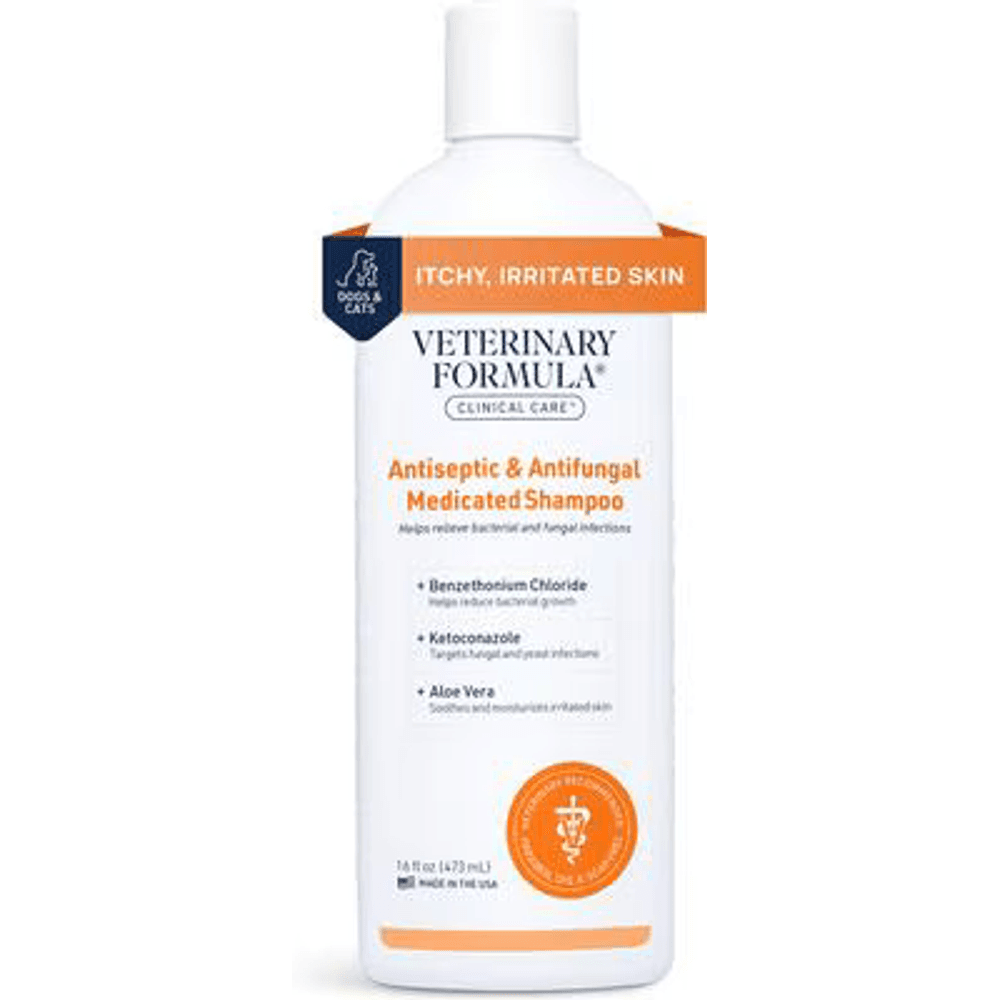
A budget-friendly medicated shampoo with ketoconazole and benzethonium chloride that helps control the fungal and bacterial skin infections behind ringworm, with aloe to soothe irritated skin. A common vet-recommended bath option.
Petful may earn a commission when you click through to Chewy, at no extra cost to you.
Why Is My Dog's Belly Turning Black? Where Darkening Shows Up
A dog stomach getting darker is the change most owners spot first, followed by the groin and armpits. Normal pigmentation in dogs is symmetrical and stable; the pigment worth a vet visit is the kind that spreads or itches. Location is one of the best clues a dog gives you. Merck lists the legs and groin as the usual first sites, with spread to the lower neck, abdomen, hocks, eyes, ears, and the skin between the anus and the genitals. Each area tells a slightly different story:
- Belly and lower abdomen: the spot owners notice first, because the skin is thin and pink. A dog's belly turning black is usually allergy or yeast, with floor friction adding to it in heavy dogs. In Pugs and Miniature Schnauzers, Bajwa also describes papillomavirus-associated pigmented plaques on the belly and inner thighs.
- Groin and inner thighs: the first place secondary hyperpigmentation appears, per Merck. Early flat darkening here in a paw-licking dog is atopic dermatitis until proven otherwise.
- Armpits: friction plus allergy; thickened, velvety, black armpit skin is the textbook lichenified picture.
- Ears: darkening of the ear flap and canal follows chronic ear infections and allergy.
- Around the eyes and muzzle: face rubbing from allergy.
- Anus, vulva, and prepuce: friction and licking, usually harmless.
- Hocks and elbows: pressure-point calluses are friction, not disease.
When a dog's stomach turned black evenly, the list above applies; dog skin changing color in scattered black spots on the belly is a different story. Scattered flat freckles that never change are usually lentigo, which Bajwa describes as symptom-free macules; blackheads (comedones) are dark dots in the pores. A single raised, growing, or bleeding spot is the one to book an appointment for.
 Sponsored
Vet care that's always there
Unlimited video calls and messaging with licensed vets for less than a typical vet visit. One membership covers up to five pets.
Use code Pets30
Plans start at $11/month · covers up to 5 pets
- Licensed vets in most states
- Rx for 150+ conditions
- 4.7 on Trustpilot
Hormonal Disease and Skin Darkening
Two hormonal diseases put pigment on the skin without any itch: Cushing's disease (too much cortisol) and hypothyroidism (too little thyroid hormone). In Cushing's disease, Bajwa explains, pituitary hormones that rise with the disease stimulate melanin production. In hypothyroidism, the coat thins and the exposed skin darkens and thickens over time. Symmetrical hair loss on both flanks, thin skin, recurring skin infections, a pot belly, more thirst and urination, weight gain, or low energy usually come with it, and blood tests make the diagnosis.
Petful's guide to Cushing's disease in dogs covers the tests, treatment, and what to expect, and VCA lists hyperpigmentation among its common signs. The companion guide to thyroid issues in dogs explains hypothyroidism and its skin and coat changes.

Probiotic soft chews that target seasonal allergy discomfort, occasional skin sensitivities, and paw licking with a blend of probiotics and skin-supporting ingredients.
Petful may earn a commission when you click through to PetLabCo.®, at no extra cost to you.
Friction, Sun, Shaving, Age, and Other Non-Disease Causes
Not every dark belly is a medical problem. These causes are common, mostly harmless, and easy to confuse with disease:
- Friction and weight: a heavy dog's belly, groin, and elbows rub on floors and on themselves. Merck names obesity as a predisposing factor; the darkening improves slowly with weight loss.
- Sun: a dog's skin can turn black in summer on thin-coated or shaved skin. Bajwa notes seasonal UV darkening in outdoor dogs; it fades over winter. Golden retriever hyperpigmentation is a common example: a golden retriever belly turning black with age and sun is usually benign darkening of the sparsely furred belly seen in light-coated breeds.
- Shaving and clipping: a dog's skin turning black after shaving happens when the coat is slow to regrow, most often in plush-coated breeds. If the hair does not return for months, see the hair loss in dogs guide.
- Age: do dogs' skin darken with age? Mildly, yes. An old dog's skin turning black on the belly, with no itch or thickening, is usually accumulated sun, friction, and the pigment left by past flares; a senior with thirst or coat changes still needs the hormone tests above.
- Drugs and scars: Bajwa lists mitotane, minocycline, cabergoline, and ketoconazole as medications that can darken skin, and deep scars often heal dark and hairless.
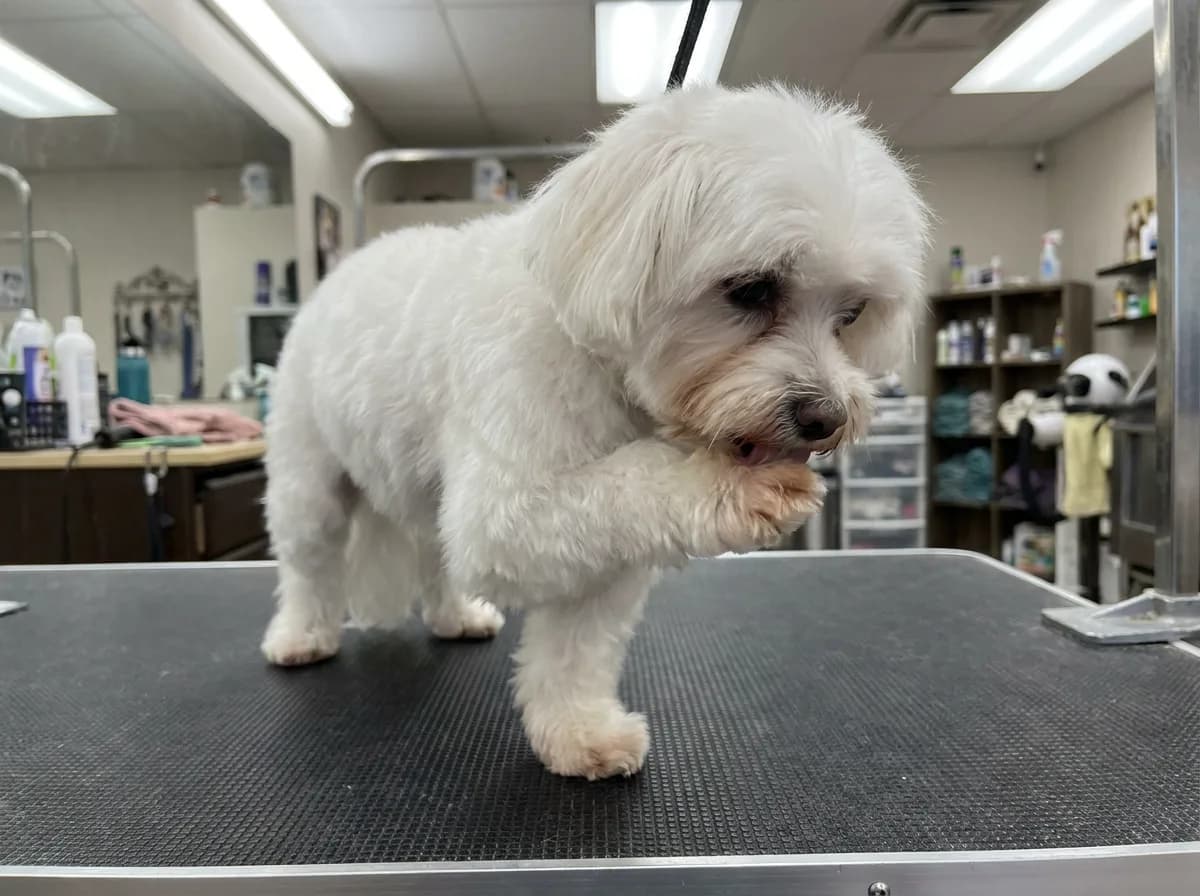
Saliva staining is the look-alike that fools the most owners. A white Poodle or Maltese that licks its paws ends up with a rust-brown licked paw, and the saliva staining sits mostly in the fur rather than the skin. The licking, almost always allergy, is what needs attention; while your vet sorts that out, a soft barrier such as the KONG Cloud Collar for Dogs & Cats interrupts the lick cycle without a rigid cone.
When Dark Skin Needs a Vet: Warning Signs and Look-Alikes
Is hyperpigmentation in dogs dangerous? On its own, no; it is slow and not an emergency. What matters is the company it keeps. A dog whose skin is turning black and itching needs an appointment because the itch is ongoing and treatable. Skin turning black and smelly almost certainly has yeast or bacteria on board. A black rash on a dog's belly, meaning dark skin with bumps, crusts, or raw patches, is infection until cytology says otherwise.
- A raised or growing spot, or one that bleeds or ulcerates. Sudden purple or bruised-looking skin, which is not hyperpigmentation and can signal a bleeding problem. Darkening together with drinking and urinating more, hair loss on both flanks, or a pot belly. Dark skin that is raw, oozing, or painful. Skin darkening by itself does not point to liver disease; liver problems show as yellowed gums or eyes, vomiting, and appetite loss.
Most black-spot worry comes from something that is not hyperpigmentation at all:
| What you see | How to tell it apart | What to do |
|---|---|---|
| Dirt or "looks dirty" belly | Wipes off with a damp cloth; true darkening does not | Wash and recheck |
| Comedones (blackheads) | Tiny dark dots inside the pores, often on a Dachshund or short-coated belly | Mention at next visit; follow up if they get inflamed |
| Saliva staining | Rust-brown color mostly in the fur of licked paws or muzzle on a light coat | Ask your vet why the dog licks |
| Bruising | Purple or red rather than brown or black, appears suddenly, may spread | Same-day vet visit |
| Sun freckling and lentigo | Flat, scattered black freckles that never change, no itch | Monitor; no treatment needed |
| Melanoma look-alike | A single raised, growing, or bleeding dark nodule, not flat spreading darkening | Prompt appointment for an aspirate or biopsy |
Petful's guide to skin cancer and melanoma in dogs shows what melanoma spots look like; if your dog's dark spot is a bump rather than a patch, go there next.
Diagnosis and Treatment: Will Hyperpigmentation in Dogs Go Away?
Will hyperpigmentation in dogs go away? Secondary hyperpigmentation usually fades over weeks to months once the cause is controlled, and Merck notes it may take months for the skin to return to normal. Skin that has been thick and black for years may never fully return to pink, and Bajwa cautions that in incurable conditions such as atopic dermatitis the pigment comes back with each flare. Primary Dachshund hyperpigmentation does not go away; it is managed for comfort.
Owners often ask about home remedies for hyperpigmentation in dogs, especially when the skin has slowly turned black as the dog aged. What helps is treating the itch cause, using medicated shampoos as your vet directs, weight loss to reduce friction folds, and sun avoidance on thin-coated skin. What does not help is bleaching or lightening creams or unproven supplements, and the pigment itself often stays even after the cause is fixed.
How vets find the cause
Merck and DVM360 describe a stepwise work-up, most of it in one visit:
- History and exam: when it started, seasonal patterns, diet, medications, and where the dog is itchy.
- Skin scrapings and cytology (tape or impression smears): scrapings rule out mites; cytology shows yeast and bacteria in minutes and is the most useful single test.
- Endocrine blood tests: thyroid and cortisol testing when the dog is not itchy or has body-wide signs.
- Allergy work-up: an elimination diet trial or allergy testing, once infection is controlled.
- Biopsy: for thickened skin that does not respond, a single unusual spot, or a suspected primary case.
Treatment that works on the cause
How to treat hyperpigmentation in dogs comes down to treating what is underneath. The shampoo schedule, endocrine treatment and expected fading time for primary versus secondary cases differ:
- Infection: Merck reports that medicated shampoos used two to three times a week benefit many dogs, and that secondary infections are treated before any steroid is used. Chlorhexidine handles bacteria; miconazole or ketoconazole handles yeast. Oral drugs are added for deeper infection.
- Allergy: flea control, a diet trial, and long-term itch control with the medications your vet prescribes; controlling the itch is what stops new pigment.
- Hormonal disease: treating Cushing's or hypothyroidism reverses the skin changes over months.
- Friction and weight: weight loss and a soft bed do more for a rubbed belly than any product.
- Primary Dachshund hyperpigmentation: Merck notes that early cases may respond to shampoo therapy and steroid ointments, with oral or injectable medication for some dogs.
Once your vet confirms a bacterial or yeast infection, a medicated shampoo is the workhorse of the plan. The Veterinary Formula Clinical Care Antiseptic & Antifungal Medicated Shampoo pairs an antiseptic with ketoconazole, and a chlorhexidine option such as Pet Honesty Chlorhexidine Antibacterial Dog Shampoo covers bacterial cases; either gets about ten minutes of contact time before rinsing. Start it after the diagnosis, because a shampoo cannot tell yeast from mites.
Chronic skin work-ups add up, so pet insurance for chronic skin conditions is worth pricing before a diagnosis; see whether pet insurance is worth it. Expect the itch and smell to improve within a couple of weeks of treating infection, while the color lags well behind. Photograph the belly on the day treatment starts and compare monthly.
Frequently Asked Questions About Hyperpigmentation in Dogs
There is no safe bleaching product that lightens a dog's skin, and human lightening creams can burn it. What helps at home is to treat the itch first with your vet's plan, keep folds clean and dry, help an overweight dog lose weight, and limit sun on shaved skin. The color follows the cause, so removing the cause is the only home remedy that works.
A shampoo treats the infection, not the color. Once your vet confirms bacteria or yeast on cytology, a medicated shampoo with chlorhexidine or miconazole (or ketoconazole) is used two to three times a week, left on about ten minutes, then rinsed. For itchy skin without infection, a fragrance-free oatmeal shampoo soothes but does not treat.
What owners usually see in a puppy is normal puppy pigment spread: pink skin that develops black patches or freckles during the first year, with no itch or thickening. True primary hyperpigmentation appears in Dachshunds by about one year of age with thickened, velvety skin in the armpits and groin. An itchy, smelly, or balding puppy needs the same work-up as an adult.
A darkening ear flap or canal almost always follows chronic ear infection with yeast or bacteria, usually on top of allergy; the ear is itchy, smelly, or waxy, and the dog shakes its head. Treating the infection and the allergy behind it stops the darkening. In Yorkies and Silkies, darkening ears with thinning ear hair can also be a breed-related hair-cycle problem.
Even darkening around the anus, vulva, or prepuce is common and usually comes from friction and licking, especially in overweight or allergic dogs. Merck lists the area between the anus and the genitals among the usual sites, and it needs no treatment on its own. A new lump, a sore that does not heal, or bleeding needs a prompt vet exam, because perianal tumors appear in the same spot.
Sources
- Merck Veterinary Manual (Dog Owners). Hyperpigmentation (Acanthosis Nigricans) in Dogs. Updated September 2024. https://www.merckvetmanual.com/dog-owners/skin-disorders-of-dogs/hyperpigmentation-acanthosis-nigricans-in-dogs
- Bajwa J. Cutaneous hyperpigmentation in dogs. Can Vet J. 2022;63(1):85-88. https://pmc.ncbi.nlm.nih.gov/articles/PMC8682925/
- VCA Animal Hospitals. Cushing's Disease in Dogs. https://vcahospitals.com/know-your-pet/cushings-disease-in-dogs
- DVM360. Diagnosing dermatologic disorders in dogs. https://www.dvm360.com/view/diagnosing-dermatologic-disorders-dogs

VMD
Dr. Debora Lichtenberg, VMD, is a small animal and exotics veterinarian who has been practicing medicine for over 30 years. A graduate of the University of Pennsylvania School of Veterinary Medicine, Dr. Lichtenberg also trained at the Philadelphia Zoo. She now practices in the New York City area and lives in the West Village with her husband and her rescued pets, Cocoa and OG. Dr. Lichtenberg has been writing for Petful for many years, and she has been recognized with Certificates of Excellence from both the Dog Writers Association of America and the Cat Writers Association of America.
Sign up for expert-backed reviews and safety alerts all in one place.